Tuesday, October 20, 2009

Idiopathic Pulmonary Fibrosis and you


What Is Idiopathic Pulmonary Fibrosis?

Idiopathic pulmonary fibrosis (IPF) is a buildup of scar tissue in the lungs. This scar tissue damages the lungs and makes it hard for oxygen to get in. Not getting enough oxygen to the body can cause serious health problems and even death.“Idiopathic” is the term used when no cause for the scarring can be found. In these cases, doctors think the scarring starts by something that injures the lung. Scar tissue builds up as the lungs try to repair the injury. In time, so much scarring forms that patients have problems breathing.
IPF usually worsens over time. However, while some patients get sick quickly, others may not feel sick for years. There is no cure for IPF, but there are treatments that may be able to slow down the lung scarring.
If you have been diagnosed with IPF, this information is for you. Understanding your condition will go a long way to help you cope with the effects it has on your body. Read on to find out more.


Symptoms of IPF

                                                   
The two major symptoms of IPF are shortness of breath 
and cough. Other symptoms may include:
• Fatigue and weakness
• Chest pain or tightness in the chest
• Loss of appetite
• Rapid weight loss

What Are the Causes of IPF?
The causes of IPF are unknown. There are other conditions that cause lung scarring. Lung scarring that is the result of other conditions is often called “pulmonary fibrosis” but should be called by the name of the cause. These other causes include the following:
• Diseases, like rheumatoid arthritis and sarcoidosis.
• Medicines, such as those used for certain heart conditions.
• Breathing in mineral dusts, such as asbestos or silica.
• Allergies or overexposure to dusts, animals, or molds. There are many names for this condition, such as “bird breeder’s lung,” “farmer’s lung,” or “humidifier lung.” These conditions are called hypersensitivity pneumonitis.
The job of your lung specialist (pulmonologist) is to determine if you have IPF or one of these other diseases.

Who Gets IPF?
Five million people worldwide have IPF, and it is estimated that up to 200,000 people in the United States have this condition. It usually occurs in adults between 40 and 90 years of age and is seen more often in men than in women. Although rare, IPF can run in families.

How Is IPF Diagnosed?
Patients with any symptoms of IPF should see a pulmonologist to rule out similar conditions.
The doctor will use a number of tests, including:
• Breathing tests: to measure how well your lungs are working.
• CT scan: to get a detailed image of your lungs, and to see if scarring has started.
• Blood tests: to see if you have an infection, problems with your immune system,
or to see how much oxygen is in your blood.
• Bronchoscopy: to test a small sample of lung tissue. A tube is inserted through the nose or mouth into the lung. A light on the end of the tube lets the doctor see where to go. The doctor then takes a small piece of lung tissue to be tested (this is called a biopsy). You usually do not need to stay overnight in the hospital to have this done.
• Thoracoscopic biopsy: to obtain larger tissue samples. This is a surgical procedure in which small incisions are made in between the ribs. It usually requires a hospital stay and general anesthesia.

Treatment for IPF
Once lung scarring forms, it cannot be removed surgically. Also, at this time, there are no medications that remove lung scarring.
However, there are treatments, such as the ones that follow, that may be able to help.

Smoking Cessation

                                                             
Cigarette smoke not only damages the lining of the lungs, it can also make you more likely to get a lung
infection. While some studies suggest that patients with IPF who smoke actually live longer, these studies
are not accepted by everyone, and most experts agree that you should stop smoking.

Supplemental Oxygen

                                                   
As lung scarring gets worse, many patients need extra oxygen to help them go about their daily lives without getting too out of breath. You get this oxygen from a tank that you carry around with you. In later stages of IPF, oxygen may be needed even while sleeping or resting.Oxygen is not addictive, so you do not have to worry about using it too much. To help maintain your oxygen levels, ask your doctor about a small, easy-to-use device called a pulse oximeter. This device helps you to know just how much oxygen flow you need, especially during activity.
If you use oxygen, you may qualify for a discount on your electric bill. Contact your electric company for more information. Also, to prepare for a power failure, be sure to register as a “priority” with the electric company, so that your power will go back on as soon as possible. In some areas, you are required to register with your emergency medical services in case of an emergency.

Exercise
Regular exercise can help patients with IPF. Staying in shape not only keeps your breathing muscles strong, it also gives you more energy. This is because healthy muscles need less oxygen to perform work. Many communities have exercise centers (usually associated with hospitals) that have programs especially planned for patients with lung conditions.

Nutrition
Many patients with IPF lose weight because of their disease. If you lose too much weight, your breathing muscles can become weak. You also may not be able to fight off infections very well. A well-balanced diet is important to keep up your strength. Be wary of supplements and other nutrition treatments that claim to improve IPF.

Medications
There is a variety of drugs used to treat IPF. They are often given for long periods of time (3 to 6 months or longer), and regular check-ups may be needed to see how well they are working. The following are examples of some of the medications used for IPF:
• Corticosteroids. This is a common treatment for many lung conditions. However, corticosteroids have many side effects and do not usually work well for patients with IPF. In fact, they may do more harm than good. Most experts agree that these drugs should only be used for patients who have had improvement while taking them.
• Cytotoxic and immune suppressing drugs. These medicines are sometimes used for cancer and transplantation patients. Bone marrow problems may occur, and white blood cell counts must be watched closely to avoid levels becoming too low. How well these drugs work for IPF has never been well established.
• Other medications. Colchicine (used to treat gout) may help stop scar tissue from forming; however, it has not been shown to be better than the more commonly used drugs. Another drug, called N-acetyl cysteine (an antioxidant), may have some benefit, but experience with the drug is limited, and more studies are needed. Many experts think that acid reflux disease (when stomach acid backs up into the throat) is an important factor in IPF. Patients with this condition should take medicines to help control it.
• Experimental treatments and clinical trials. Many FDA-approved studies, called clinical trials, are being performed to find new medications for IPF. In a clinical trial, a new drug is compared to a “placebo” (an inactive medicine, such as a sugar pill). Participants do not know which treatment they are getting, the experimental medicine or the placebo. Clinical trials are important, because they can speed the discovery of new drugs for IPF. Talk to your doctor about information on new treatments for IPF.

Lung Transplant
For some patients with severe IPF, the only way to improve their quality of life or increase their survival may be a lung transplant. However, the decision to have a lung transplant must be made carefully. On average, only 50% of patients live for 5 years after a lung transplant. Not all patients qualify for lung transplantation, depending on age or other medical problems. Talk to your doctor to find out more.

Specific Issues:
Lung Infections
Due to lung damage, lung infections can cause serious problems for patients with IPF.
Call your doctor right away if you notice the following symptoms:
• Worsened cough
• A change in the color or amount of sputum you produce
• Fever
• Chills
Your doctor will prescribe an antibiotic if you have a bacterial lung infection.
To avoid other infections and illnesses, you should also get the pneumococcal pneumonia vaccine and a yearly flu shot. These vaccinations may help keep you from becoming severely ill. Talk to your doctor about how and when to get these shots.

Coping With Cough
A nagging, dry cough is one of the most common complaints of patients with IPF. Although cough is often caused by IPF, there are other things that can make it worse. These include the following:
• Postnasal drip
• Acid reflux disease
• Allergies and pollutants
• Cigarette smoke
• Some medications, such as beta-blockers or angiotensin-converting enzyme (ACE) inhibitors,
 for blood pressure control

Nasal sprays, cough medicines, and cold remedies may help control cough. Ask your doctor if your cough is treatable.

Leg Swelling
Patients with IPF may develop swelling in their legs. Lung scarring makes it difficult for the heart to pump blood through the lungs. When this happens, fluid can back up, causing the legs to swell.  This is called right-sided heart failure and can get worse if blood oxygen levels are too low. If you have swelling in your legs, see your doctor right away.

Sexuality
Because sexual intercourse requires more energy, patients with IPF may have problems with shortness of breath during sex.
The following tips may help:
• Choose a time for intercourse when you are relaxed and rested; rushing things uses up more energy.
• Try positions that place less stress on the heart and lungs, such as side by side or on your back.
• Avoid sexual intercourse after a heavy meal.
• Use oxygen if it has been prescribed for you.
• Most importantly, talk to your partner about your concerns. Work together to find the most comfortable way for both of you to enjoy having sexual intercourse.

Travel
A loss of oxygen pressure during air travel often makes flying very difficult for patients with IPF. If you are planning to fly, your doctor may be able to test you to see if you need oxygen during your flight. The airline rules for oxygen use often change. Contact the airline, and let them know that you will need oxygen during the flight (they may charge you a fee for this). Also, make sure you can get oxygen, should you need it, when you get off the plane, particularly if it is in an area of higher altitude.

Life Support
If your lung disease becomes very severe, you may need life support (ventilation) to keep you alive. Newer forms of mask ventilation, called bilevel pressure ventilation (BiPAP), may help for a short time. However, most patients with IPF, who are placed on a ventilator, cannot be taken off. You may need this type of ventilation for the rest of your life. It is up to you to decide if you want this treatment.
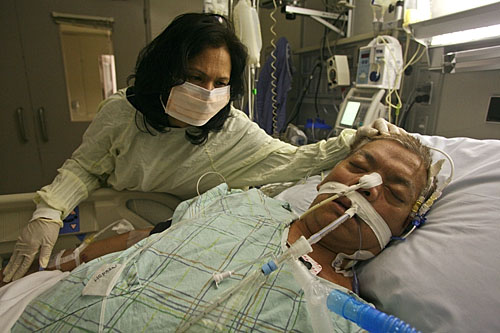


End-of-Life Issues
Talking about end-of-life issues is not easy. However, it is important that you let your family and your doctor know how you feel. There are legal forms that you can fill out that state what treatments you want or do not want, should you become too ill to make your wishes known. You should also choose someone as a power of attorney. This person can make decisions about your treatment should you become so ill that you are unable to speak for yourself.

Information Brings Hope  
When patients are diagnosed with IPF, they are understandably worried and upset. Keep in mind that there are treatments available that can help you, and you should not consider your situation hopeless. Also, knowing more about the condition can help you understand and cope with this disease. We hope that the information in this booklet will help. You may want to share it with your loved ones so that they have a better understanding of what you are going through. Having a good support system will help you stay positive and maintain your quality of life. 


Ref:
Idiopathic Pulmonary Fibrosis and You
Patient Education Guidehttp://www.chestnet.org/downloads/patients/guides/IPF.pdf

Monday, October 19, 2009

Take care of your Asthma

Here was this season of Diwali and our Asthmatic friends really passed a tough time.
So here's this a comprehensive guideline for your care if you are an asthmatic.

A Patient's Guide to Asthma Care


IS YOUR ASTHMA WELL-CONTROLLED?

If you need your quick relief (Reliever) medication as little as four times per week (not counting use for prevention of exercise-induced asthma), your asthma is probably not well-controlled.
This may sound surprising, even shocking, but it's true. Up to 85% of people with asthma can live virtually symptom-free, or well-controlled, needing little or no quick relief at all! Most of the other 15% can be greatly aided by the information in this guide.

WELL-CONTROLLED SYMPTOMS

You or your child's asthma is WELL-CONTROLLED if you:
  • have symptoms of coughing, wheezing, or shortness of breath 3 or fewer days per week;
  • can carry out most desired activities, work and play, without having asthma symptoms;
  • wake at night or early in the morning because of your asthma 1 or 0 nights per week;
  • have no sudden, severe or unpredictable flare-ups; and
  • need your quick relief medication 3 or fewer times per week.
If this describes you, then you have asthma that is well-controlled. As with all asthma, however, you need to monitor your symptoms in case they worsen.

Signs of Dangerous Asthma

About 10-15% of asthmatics suffer more seriously from the disease and are at higher risk of having "out of control" asthma.
IF YOU EVER...
  • get only temporary relief (1 to 4 hours) or none at all after using your quick relief medication or
  • have difficulty speaking normally because of your asthma
THIS IS AN EMERGENCY....SEE YOUR DOCTOR OR GO TO THE HOSPITAL RIGHT AWAY!

HOW DO DOCTORS DIAGNOSE ASTHMA?

Diagnosis of asthma should involve the following steps:
  • assessing symptoms of cough, wheeze, chest tightness and shortness of breath;
  • assessing severity of symptoms; do they
    • occur daytime and/or nighttime?
    • occur with physical activity?
    • occur frequently?
    • lead to missed play/school/work?

  • assessing family history of asthma, allergies;
  • assessing possible allergies to inhalants and/or food; other signs of allergy of the skin, nose and intestine;
  • referral for allergy testing (includes infants);
  • referral for breathing tests.

LIVING WITH ASTHMA: THE EXPERIENCES OF OTHER PATIENTS

Allergy/Asthma Information Association (AAIA)
A national organization devoted to helping fellow asthma, allergy and anaphylaxis sufferers, the Allergy/Asthma Information Association (AAIA) publishes current information medically screened by the Canadian Society of Allergy and Clinical Immunology, holds support groups, provides telephone support and referrals and advocates at national and regional levels.
Services are available through membership or donations. Call us at 1-800-611-7011

HOW DO DOCTORS TREAT ASTHMA?

Treatment of asthma should involve all of the following steps:
  • controlling symptoms as rapidly as possible by:
    • assessing home/school/work asthma triggers and
    • recommending avoidance; and
    • prescribing medication (steroids, inhaled or — if needed — oral, and a quick relief medication);

  • referral for asthma education;
  • checking inhaler technique;
  • scheduling a follow-up appointment; and
  • providing personalized instructions to keep track of quick relief puffs used per week and an Action Plan of what to do in case of a flare-up.
At follow-up appointment(s):
  • redoing breathing tests;
  • rechecking inhaler technique;
  • reviewing medication; and
  • providing individualized instructions to keep track of quick relief puffs used per week and reviewing the Action Plan of what to do in case of a flare-up.
This process of appointments and follow-ups continues until patients and caregivers:
  • know the signs of well-controlled and out-of-control asthma;
  • understand the need to avoid triggers whenever possible;
  • understand the need for anti-inflammatory medication;
  • learn how to adjust their medication quickly at the first signs of a flare-up; and
  • understand that an asthma educator and patient associations can help them learn all of the above.

How Asthma puts the "Squeeze" on Breathing

The inflamed lining of the breathing tubes causes the "squeeze" of muscles surrounding them, leading to feelings of chest tightness, shortness of breath, mucus production and coughing.

WHAT'S HAPPENING IN MY BODY?


INFLAMMATION

Asthma is an immune system overreaction of the lining of the airways — the breathing tubes — in the lungs. If you were to accidentally spill hot liquid onto your hands, or if you could sunburn your airways, they would look scalded and swollen. In asthmatics, this is what the linings of the breathing tubes look like — red, swollen — inflamed.
The following are the most common airborne triggers which can lead to inflammation and worsening asthma:


  • ALLERGENS, such as house dust mites, animal dander, moulds and cockroaches;
  • COLD VIRUSES and other infections;
  • IRRITANTS, such as cigarette smoke and outdoor air pollution.
There are many others.

Irritants

  • Temperature changes (bursts of cold or hot air, or seasons which bring colder or warmer air);
  • Perfumes and colognes; and
  • Strong toxic chemical smells, such as gasoline, marker pens or household cleaners.

CASCADING SYMPTOMS

Once the airways are inflamed, a number of asthma symptoms may follow. A scald or burn begins to secrete fluid. Inflamed breathing tubes can secrete mucus which can clog them. But something else can happen, too. Surrounding the breathing tubes, there are bands of muscle whose natural purpose is to contract and relax depending on physical activity. When we breathe into inflamed tissue (which obviously cannot be avoided), the bands of muscle contract more than they would if the airways weren't inflamed. The muscles tense and tighten, squeezing the breathing tubes, so that less air can move in and out. Narrowing of the breathing tubes feels like shortness of breath or breathing discomfort. Finally, a whistling (wheezing) noise as an asthmatic breathes and coughing may follow.

TRIGGER AVOIDANCE: A CLOSER LOOK AT PREVENTION

ALLERGENS

One contact with an allergen can lead to a series of immune system reactions that can go on for days or weeks, re-triggering airway inflammation long after the initial allergic exposure. This is how ongoing allergen exposure leads to ongoing inflammation and asthma. Presently there is no reliable way to calm down this immune system over-response except to prevent or reduce exposure to allergens. Scientifically proven ways to remove or reduce particular allergy triggers that can improve your asthma include:
  • buying dust mite-proof encasings for your pillows and mattresses (including the box spring);
  • removing carpeting from the bedroom of the allergic person;
  • removing carpeting everywhere in the home;
  • keeping household humidity below 50%;
  • removing pets from the home (washing will not reduce allergen levels enough);
  • avoiding outdoor activity in early to late morning during pollen seasons when you are allergic.

IRRITANTS

Non-allergic triggers are less persistent in their effect on the immune system. They are considered irritants which, when removed, can lead to relatively rapid alleviation of asthma symptoms. Regular exposure, however, can lead to recurrent, chronic symptoms. Removing or avoiding irritants is generally easier than allergen avoidance. Unnecessary exposure to these should be avoided or eliminated altogether where possible.

CIGARETTE SMOKE

Young children have smaller, more delicate airways than adults. When exposed to passive smoke, many children develop sensitive airways, which make them more susceptible to a number of problems, including asthma. Research has shown that children who live with smokers have higher rates of asthma.

EXERCISE-INDUCED ASTHMA

Exercise triggers asthma symptoms in almost all asthmatics, mild to severe. Symptoms may be prevented by doing warm-up exercises and using your Reliever inhaler about 15 minutes before activity likely to bring on symptoms.

INDOOR/ OUTDOOR AIR QUALITY

Because our energy-efficient homes let less outdoor air in and less indoor air out, indoor allergens, such as house dust mite, animal dander or moulds, can accumulate in indoor air. In effect, we are continuously breathing in higher concentrations of allergens. There is a causal link between indoor air pollution and the onset of asthma.
Solutions to this problem include:
  • reducing sources of indoor allergens (e.g. carpeting);
  • keeping humidity below 50%;
  • decontaminating mouldy places, such as basements, humidifiers, and bathroom tiles;
  • increasing ventilation throughout the home; and
  • seeking the advice of a professional indoor air quality expert (see resources section).
Outdoor pollution worsens (but does not cause) asthma symptoms.
  • Exposure should be avoided when ground level ozone concentrations are highest — in late afternoon, especially on very sunny days which contribute to increased smog levels.
  • Observe smog alerts and stay indoors on these days.

Second-hand Smoke: A contributor to Asthma and Indoor Air Pollution

  • Make your home and car smoke free;
  • Don't smoke or find a program and/or medication to help you stop;
  • Avoid smoky environments;
  • Don't let anyone smoke around you or your children; and
  • Work or go to school in a smoke-free environment

MEDICATIONS: A CLOSER LOOK AT CONTROL


The ideal asthma controller is avoidance of triggers. Learning to avoid them will, in the long run, minimize symptoms and the need for medication. On the other hand, medication should never be used as a way to cover up symptoms, for instance, to keep the cat.
Unfortunately, total avoidance of triggers is not always possible. Since you have to breathe, you're likely to end up with some inflammation. With some unusual exceptions, this means medication will have to be part of having well-controlled asthma, even in mild cases.

CONTROLLERS

The most important asthma medication is an anti-inflammatory "Controller." When you take it daily as prescribed, you can control your asthma symptoms. Indeed, you may feel almost asthma-free.
Here are some anti-inflammatory Controller-type drugs your doctor may prescribe:
  • non-steroidal inhaler;
  • low-dose inhaled steroid;
  • high-dose inhaled steroid;
  • steroid pill;
  • leukotriene receptor antagonist (LTRA) pill.
Your pharmacist can be a good resource to help you understand the role of each type of asthma medication and how to use them.

The Expanding Role of your Pharmacist

Shoppers Drug Mart HEALTHWATCH® Pharmacists have been specially trained to help you better understand:
  • asthma and your asthma triggers;
  • the role of your medications and how to use them properly;
  • the need to use additional devices, such as spacers.
In addition HEALTHWATCH® Pharmacists provide:
  • a personalized Asthma Plan;
  • instruction sheets on asthma devices; and
  • information and instruction sheets on Peak Flow Meters.

RELIEVERS

Your quick relief medication is meant to work in 1 to 3 minutes and last 4 to 6 hours. Your goal is to not need it, at least not more than 3 times a week. As you increase anti-inflammatory Controller medication, your need for a Reliever will decrease.

INHALED STEROIDS

Inhaled steroids offer the best option for the initial anti-inflammatory treatment of asthma. The initial dose in adults is usually 400 mcg daily of Beclovent/Becloforte (beclomethasone) or its equivalent in Pulmicort (budesonide) or Flovent (fluticasone). Ask your doctor. One to two inhalations are usually taken morning and evening. In more severe asthma, higher doses may be required.
The initial dose in children is usually 200 to 1,000 mcg daily of Beclovent/Becloforte (beclomethasone) or its equivalent in Pulmicort (budesonide) or Flovent (fluticasone). Ask your doctor. One to two inhalations are usually taken morning and evening. Higher doses are rarely required.

SAFETY OF INHALED STEROIDS

Children who consistently use high doses of Beclovent/ Becloforte (beclomethasone) or its equivalent in Pulmicort (budesonide) or Flovent (fluticasone) to maintain well-controlled asthma should:
  • always rinse and spit after using their inhaled steroid;
  • have their height measured regularly with a special instrument called a calibrated stadiometer; and
  • ask to be referred to a specialist for assessment.
Adults who consistently use high doses of Becloforte (beclomethasone) or its equivalent in Pulmicort (budesonide) or Flovent (fluticasone) to maintain well-controlled asthma should:
  • always rinse and spit after using their inhaled steroid;
  • ask to be referred to a specialist for assessment;
  • have the pressure inside the eyeball checked on a regular basis, particularly if they have a family history of glaucoma; and
  • ask to be referred for a test to measure bone density, especially if there are other risk factors for osteoporosis.

Add-On Medications

If asthma is not adequately controlled with moderate doses of inhaled steroids, other "add-on" drugs may be tried. These include LTRAs including Accolate and Singulair (pill form), long-acting bronchodilating Controllers, such as Serevent (salmeterol), Advair (salmeteral / fluticasone combination) or Oxeze or Foradil (formoterol). Less often, theophylline (pills), ipratropium or nedocromil (inhalers) may be added.

LEUKOTRIENE RECEPTOR ANTAGONISTS (LTRAs)

The newest class of anti-inflammatory Controller drugs is called leukotriene receptor antagonists (LTRAs). They are not steroids and are not inhaled but are in are pill form. These drugs may be combined with inhaled steroids as a means of keeping the dose of steroids as low as possible. For patients who choose not to use low doses of inhaled steroids for whatever reason, these drugs can be used alone as the best possible choice among other anti-inflammatory Controller drug options.
There are currently two LTRAs available in Canada. One is called Accolate (zafirlukast), which is available for patients 12 years and older and is prescribed as one tablet twice a day for day and nighttime control. The other is Singulair (montelukast), which is available for adults and children as young as 6 years of age and is prescribed as one tablet taken daily at bedtime.

INHALING DRUGS

Inhalation is the recommended way of using Relievers and steroid Controllers. These medications are available in an aerosol puffer (metered dose inhaler, MDI) or in a special device called a dry powder inhaler (DPI).
For children under 5 years of age, aerosol puffers are recommended and must be used with a special tube and mask attachment called a spacer. The aerosol puffer, or MDI, remains a popular inhaler for children 6 and up and adults, with or without a spacer.
The aerosol puffer, however, is changing. Inhalers contain a gas called chloroflurocarbon (or CFC) to help spray the medicine into your lungs. CFCs, while safe for you, harm the ozone layer, which protects us from the sun's burning rays.
There is one CFC-free inhaler on the Canadian market, a Reliever medication (salbutamol) called Airomir. Since all aerosol puffers will become CFC-free in Canada by 2005, with a projected 60% phase-out of current MDI inhalers by 2001, CFC-free puffers are being prescribed increasingly over what you might be using now. Ask your doctor for a CFC-free version of your current salbutamol Reliever.
Many people prefer the dry powder inhaler, which is already CFC-free. The action of breathing in with the inhaler in your mouth is how the medicine gets into the lungs. This kind of device may not be appropriate for children under 5 years of age because they may be unable to breathe in hard enough to actuate the drug.

Action Plans

Asthma is a variable disease. It can improve and worsen. Asthmatics need to learn to keep track of symptoms with a Peak Flow Meter so they can increase medication at the earliest sign of a flare-up, before asthma gets out of control.
A Peak Flow Meter is a small blowing device. When your asthma flares, the meter readings drop. Your doctor's written Action Plan will indicate at what peak flow reading you should begin taking more Controller medication.

ADJUSTING MEDICATIONS

Once well-controlled asthma is achieved (need for Reliever 3 or fewer times per week), your inhaled steroid should be reduced to the lowest possible dose needed to maintain control.

A Final Word

This article is intended as a basis for questions for your doctor, pharmacist, asthma educator, discussions with family, friends, teachers and coworkers who need to better understand asthma and for the individual or caregiver to take steps toward better control of the asthma they're living with.
You control the road to better health!

Reference: http://aaia.ca/en/patients_guide_to_asthma_care.htm

Promote your blog

Promote Your Blog